
Crop Walking
The importance of continuous, detailed assessment of crops on a field-to-field basis is vital. Plant counts are a key tool in determining the potential yield of each crop. Despite the temptation to re-sow patchy areas of winter cereals, this should be approached with caution and should only be considered as a last resort. There are significant economic implications associated with re-sowing to consider such as the ability of the lower yield potential spring cereal crops to carry the establishment costs associated with the removed crop.
When assessing your crops, especially those that appear thin or patchy, consider a strategic approach to fertiliser application. A 20% reduction in application rates of N, P and K may prove to be more cost-effective for these specific conditions. Always evaluate each crop’s needs to make informed decisions. This ensures we drive growth and tillers for optimum recovery, while also considering overall economic input efficiency.
Roots: The Foundation for Yield
Given the weather we’ve had since sowing, root systems in general are in poor condition due to waterlogged soils. Poor roots systems result in poor fertiliser utilisation and can lead to root diseases like Eyespot and Take All if, or when, we experience dry periods. To increase root mass an application of a foliar P fertiliser should be included early, along with your normal trace element application practises. By doing this it helps the plant drive root mass, aiding tiller survival and ultimately helping to increase and maintain yield.
Winter Barley
Uniformity is key for crops this spring, a plant count of 150-250 plants/m² in Winter Barley is a perfectly viable crop although targets should be around 350. It is advised to get the first split of N onto Barley as soon as possible, to drive growth and encourage tillering. An early application of 40 units of Nitrogen can be enough to kickstart the crop in Early March. It is recommended to follow this with the main split before GS31 (Second node detectable).
Winter barley is sensitive to stress, so be cautious with early applications of PGRs. These should only be considered when the temperature are above 8 degrees and ideally before the crop reaches GS 30. PGRs can help reduce the apical dominance, encouraging the plant to develop stronger roots and more tillers.
Weed control is a priority for winter barley. While the application to control certain grassweeds such as annual meadow grass has passed, there’s still an opportunity to tackle weeds such as chickweed, cleavers, poppies and other broadleaved varieties. Effective herbicide application now can help ensure a cleaner crop and reduce competition for resources.
Winter Wheat
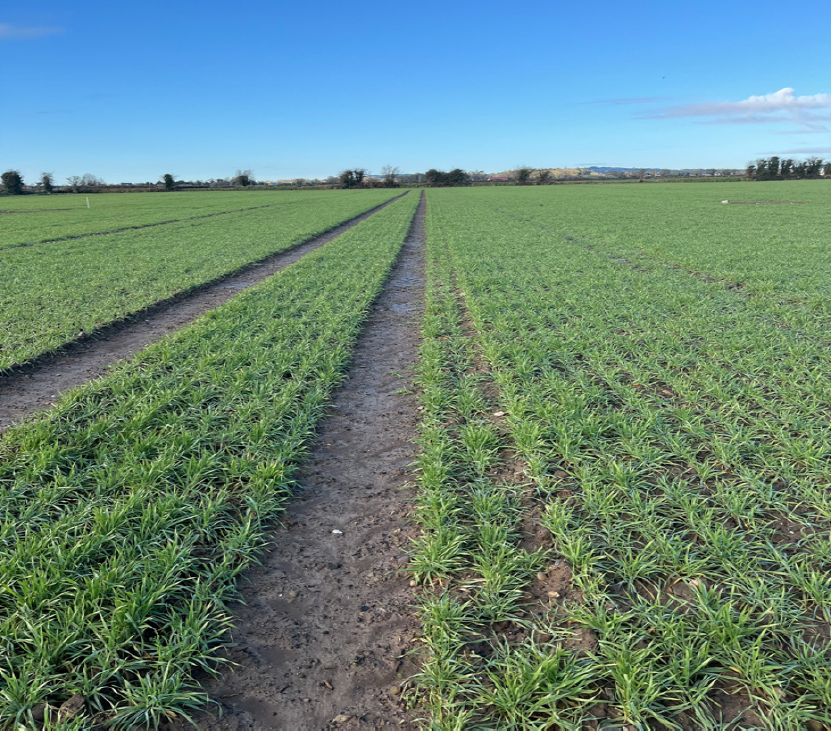
Wheat has a great ability to make up for lost time and conditions—it’s a crop that can compensate. Achieving an even spread of plants is just as important for wheat as it is for barley. Aim for a plant count of 150-200 plants/m² to produce viable yields.
Getting Nitrogen on your wheat early is key to pushing your plants forward and maximising tiller numbers. The Nitrogen applications can be divided into three parts: ¼ ; ½ ; ¼. Where there is a risk of take-all or on second wheats, higher initial N application rates as soon as possible is advisable.
Don’t delay with herbicide applications. As soon as the weather and soil conditions allow, apply
herbicides to control weeds. Timely applications are crucial to prevent weed competition to ensure a productive growing environment. Making the most of the early spring window for these treatments can make a significant difference to the success of your crop.
Field history is crucial when making the correct herbicide choice, especially where no Autumn application has taken place.
P&K
Its vitally important to ensure you have in date soil test results. Soil tests are required every 4ha (10ac). Without a soil test, it is assumed that the soil is at Index 4 for Phosphorus (P) and as a result, no Phosphorus allowance will be made for that area.
Phosphorus (P) and Potassium (K) applications should be carefully considered to replace crop nutrient offtakes. This approach ensures that soil fertility is maintained at optimal levels for the growth and health of your crops.
| Winter Cereal | 10t/ha | 7.5/ha |
| P Offtake | 38 kg/ha | 28 kg/ha |
| K Offtake | 98 kg/ha | 74 kg/ha |
Adhering to these guidelines not only supports sustainable farming practices by maintaining soil health but also ensures optimum yields and quality by ensuring that your crops have the necessary nutrients available. Always consult with your Drummonds representative for specific advice and recommendations tailored to your farm’s conditions and crop varieties.
Winter Oilseed Rape
Evaluating the Green Area Index (GAI) of your oilseed rape after winter is crucial for optimal crop management. GAI measures the amount of green leaf area compared to the area of ground it covers. If your crop has a large and dense canopy, you might be able to reduce the amount of Nitrogen (N) fertiliser needed. For crops with a GAI less than 0.8 or covering less than 50% of the ground, using a Plant Growth Regulator (PGR) can help develop a more uniform canopy and increase the leaf area, which is key for enhancing the number of Seeds per square meter and consequently, the potential yield.
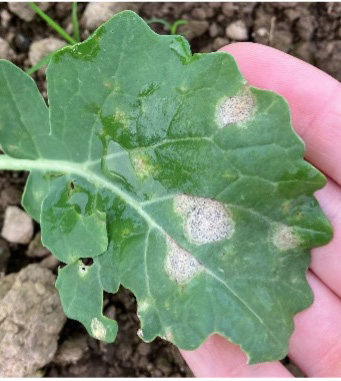
You can start applying Growth Regulators at the beginning of stem extension and continue up to the green bud stage. This helps in shaping the crop’s canopy for better sunlight penetration and air circulation, which are essential for healthy growth. An early application of fungicides is critical for controlling diseases such as Light Leaf Spot and Phoma stem canker, which can significantly impact crop health and yield. It’s particularly important to act quickly against Light Leaf Spot, treating it as soon as you notice the first signs to prevent widespread damage.
| Crop Description | Total N |
| GAI <1.0 | 225kg/ha |
| GAI 1.0 | 210kg/ha |
| GAI 1.5 | 190kg/ha |
| GAI 2.0 | 130kg/ha |
Beans
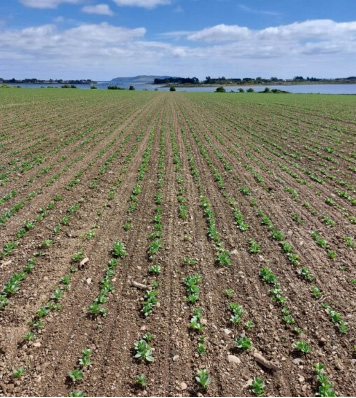
The best time to plant beans is early March. For spring-sown beans, aim for a density of 30-35 plants/m2 (depending on TGW). They have the potential to be very profitable through availing of the protein payment scheme. Key factors like seeding rate, plant spacing and the Thousand Grain Weight (TGW) are critical to consider for a successful bean crop, with early planting preferred. Soil conditions play a significant role in the outcome of bean cultivation; for instance, data from the PGRO highlight that soil compaction can lead to yield losses of up to 40%.
It’s important to incorporate P & K into the seedbed when planting beans. Drummonds Agriphos is an excellent source of P & K, providing nutrients that are immediately available to the plants. This not only helps with root development and soil structure but also boosts microbial activity in the soil. Agriphos also contains trace elements like Calcium and Magnesium, which are beneficial for nutrient uptake and improving soil quality.
Pre-emergence weed control is crucial in bean crops as there are not many post-emergence spray options. Be mindful of your rotation, where oilseed rape is included the herbicide Emerger can be used to help control volunteer rape in bean crops. It is recommended that beans are grown no more than once in a 5-year rotation.
Spring Cereals
Drummonds is proud to offer three standout spring barley varieties on the 2026 DAFM Recommended List, combining strong yield potential, robust disease resistance and excellent grain quality ideal choices for Irish tillage enterprises.
Lollipop is a versatile, good yielding spring barley that delivers a compelling agronomic package. With a relative yield around 102% of the control on the Recommended List and a top-end thousand grain weight (TGW) of ~61 g, Lollipop is well-placed for both feed and quality markets. Its strong disease resistance especially to mildew, net blotch and rhynchosporium helps reduce reliance on fungicides, while its consistent grain quality supports good hectolitre weights and low screenings at harvest.
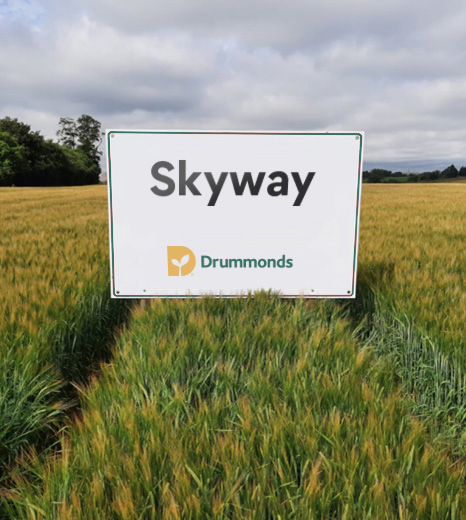
Skyway has established itself as a high performing spring barley with excellent consistency across seasons. Its high yield performance, solid grain quality and reliable disease profile make it a sound choice where growers want to balance output and agronomic stability. Drummonds customers value Skyway’s adaptability to diverse Irish conditions.
Rockway delivers robust and reliable performance across a range of sites, particularly on fertile soils where strong standing power is essential. This variety combines good yield potential with commendable resistance traits especially against mildew and rhynchosporium and consistent grain quality metrics. It’s a dependable option to anchor a spring barley drilling plan.
Together, Lollipop, Skyway and Rockway give Irish growers a powerful trio: yielding strongly, resisting key diseases and producing grain that meets market expectations. Drummonds continues to support growers with seed, agronomic advice and local expertise.
Liquid Fertiliser
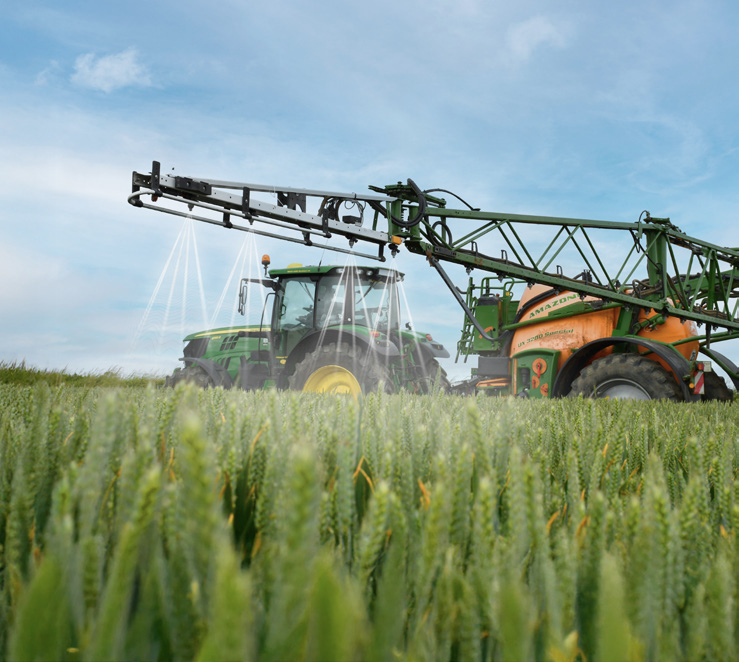
Liquid fertiliser is a perfect combination of Nitrogen (N) and Sulphur (S) in a solution. It is a complex compound fertiliser (CCF) meaning it is a completely homogeneous solution. Every droplet will contain the exact amount of Nitrogen and Sulphur as stated by the fertiliser blend.
Liquid Nitrogen (N) contains:
- 50% of N as urea.
- 25% of N as ammonium.
- 25% of N as nitrate.
- +/- Sulphur.
At Drummonds, “N-Rich” (24N + 3S) is our premium blend of Nitrogen and Sulphur for optimal crop performance. Liquid fertilisers enable growers to improve their farm performance and profitability but also to meet the stricter regulations relating to chemical nitrogen (N).
N-Rich is a soil acting fertiliser, taken up through plant roots. It is NOT a foliar fertiliser. The objective is to create large droplets which will run off leaves and enter the soil. Just as with granular urea, a urease inhibitor and/or nitrogen stabiliser may be added to protect from losses, making it an extremely environmentally friendly product.
There are several reasons why farmers should consider using liquid fertiliser:
- Uniform application.
- Easy to store and apply.
- Increased yields from headlands.
- A wider window for application – may be applied in both wet and dry conditions.
- Almost immediately available to your crop even in dry conditions.
- Reduced waste – No fertiliser enters ditches/hedges and nearby streams/rivers.
Liquid fertiliser – on grass farms
There are several reasons why livestock farmers should consider using liquid fertiliser:
- Increases in dry matter production.
- Higher growth rates following drought periods.
- Increased protein and energy in grass.
- Quicker regrowth following application in dry weather – Liquid Fertiliser may be applied immediately when grass is cut and can be followed with slurry straight away. The slurry will help the applied Liquid Fertiliser to be taken up quicker by the grass roots leading to a far quicker recovery.
Liquid Fertiliser is comparable to granular fertiliser. However, the greater accuracy of application, improvement in nutrient use efficiency (NUE) and reduced losses make it even more cost-effective. Grassland farmers who have made the switch to liquid fertiliser claim they are growing more grass, have more consistent grass quality, and more uniform covers.